
The Short Answer
John Beal Roofing installs seamless aluminum gutters, downspouts and leaf guard systems throughout the Indianapolis metro, sized to the roof area they drain and pitched for real flow. Most homes are well served by 5-inch K-style gutters; large or steep roof areas need 6-inch. We install gutters alongside roof replacement, which is when it is cheapest to do both. Free estimate, family-run since 1947. Call (317) 726-6000.
Why Gutters Are a Roofing Problem
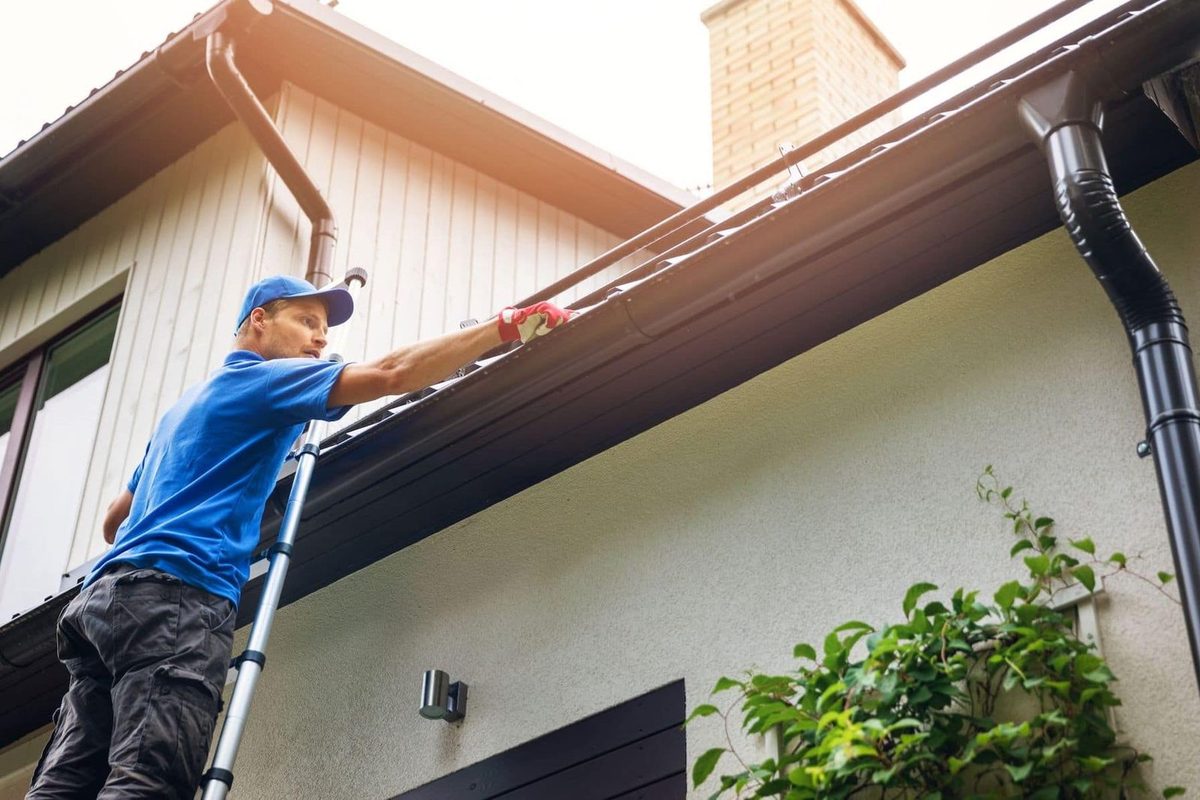
Gutters are the reason your foundation stays dry, and they are the reason your fascia and soffit rot when they fail. An undersized or clogged gutter overflows at the eave, which soaks the fascia board, wicks into the soffit, and eventually reaches the roof decking edge. By the time somebody notices soft fascia, the damage has usually been progressing for a couple of seasons.
The other half is where the water goes. A downspout that discharges at the foundation moves the problem from the roof to the basement. Central Indiana's clay soil does not absorb quickly, so water pooling at the foundation stays there and finds its way in. Extensions and proper discharge away from the house are cheap and routinely skipped.
This is why we treat gutters as part of the roof system rather than an accessory. When a Southport ranch or a Beech Grove bungalow gets a new roof, the gutter condition is part of the inspection.
Sizing, Pitch and the Details That Matter
Standard 5-inch K-style gutters handle most Indianapolis homes. But a large roof area, a steep pitch that accelerates runoff, or long unbroken runs feeding a single downspout can overwhelm them — and the homeowner concludes the gutters are 'always clogged' when they are actually just too small. Six-inch gutters with correspondingly larger downspouts solve it.
Pitch is the other invisible variable. A gutter needs a slight, consistent fall toward the downspout. Too little and water stands, breeds mosquitoes and adds weight; too much and it looks wrong and overshoots. Hanger spacing matters as well, particularly with our freeze-thaw cycling — a gutter loaded with ice will pull away from the fascia if the hangers are too far apart.
Seamless is the standard for good reason: gutters are formed on site to the exact length of each run, so the only joints are at corners and outlets. Fewer joints, fewer leaks.
Leaf Guards: What Works and What Does Not
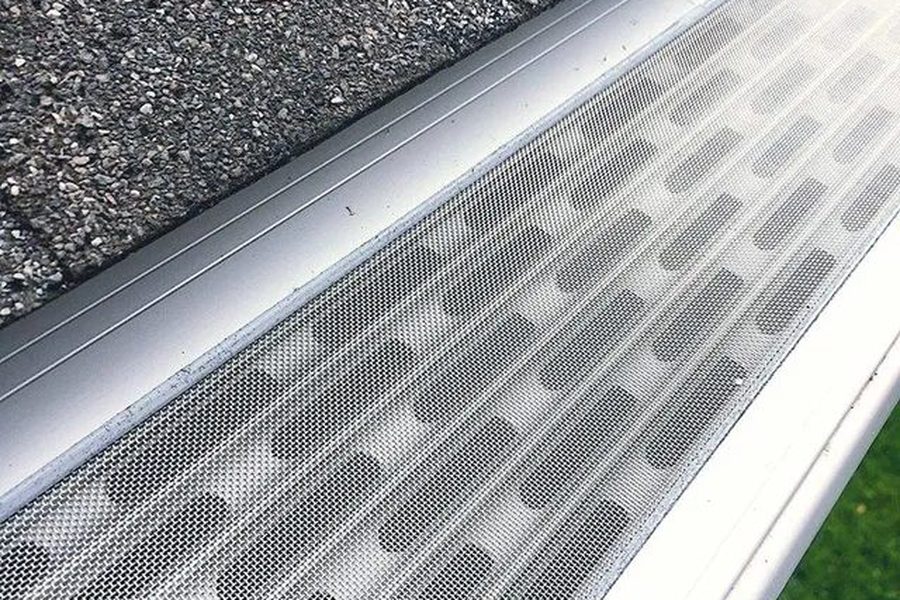
Under heavy tree cover — the Zionsville, Mooresville and older Noblesville reality — leaf protection is genuinely worth it. Micro-mesh systems, which use a fine stainless mesh over a rigid frame, are the most effective category we install. They keep out leaf litter, shingle grit and most seed and needle debris while passing water.
What does not work well: simple foam inserts that fill with decomposing debris, and wide-slot screens that let needles and maple seeds straight through. Reverse-curve systems can work but tend to struggle in heavy downpours and with fine debris.
No guard makes a gutter maintenance-free. A good micro-mesh system takes annual attention instead of three or four cleanings a year. That is a real improvement, especially on a two-story house where cleaning means a ladder and risk, but anyone promising you will never touch them again is overselling.
Frequently Asked Questions
Should I replace gutters when I replace my roof?
Usually yes if they are aging. The crew is already set up, access is already handled, and doing both at once costs less than two separate mobilizations. It also lets us set the drip edge and gutter relationship correctly.
What size gutters do I need?
Most Indianapolis homes are fine with 5-inch K-style. Large roof areas, steep pitches or long runs feeding one downspout need 6-inch. We size to the actual drainage area rather than defaulting.
Are gutter guards worth the money?
Under real tree cover, yes. Micro-mesh systems are the most effective category. They reduce cleaning from several times a year to about annually — they do not eliminate maintenance, and anyone claiming otherwise is overselling.
My gutters overflow even when clean. Why?
Usually undersizing or pitch. A gutter too small for its drainage area, or one with insufficient fall to the downspout, will overflow regardless of how clean it is.
Do you repair gutters or only replace?
Both. Resecuring hangers, resealing corners and correcting pitch are common repairs and much cheaper than replacement when the gutter itself is sound.
Where should downspouts discharge?
Well away from the foundation. Central Indiana clay drains slowly, so water dumped at the foundation stays there. Extensions are inexpensive and prevent a much more expensive basement problem.
Roofing Across the Indianapolis Metro
We serve Marion County and every surrounding county — Hamilton, Boone, Hendricks, Johnson, Hancock, Morgan, Madison, Shelby and Putnam. See the full list of cities and towns we cover →
Get a free roof inspection
No charge, no obligation, and you keep the photographs. A live person answers 24 hours a day.