
The Short Answer
For emergency roof repair in Indianapolis, call John Beal Roofing at (317) 726-6000 — a live dispatcher answers 24 hours a day, including nights, weekends and holidays. We provide emergency tarping to stop active water intrusion, then return to diagnose and permanently repair the cause in safe daylight conditions. Family-run since 1947, BBB A+ rated, with free inspections and written estimates. Do not wait for business hours — interior damage compounds by the hour.
What to Do Right Now, Before We Arrive
Move what you can out of the way and get containers under active drips. If water is pooling in a ceiling — a bulging, sagging spot — put a bucket underneath and puncture the low point with a screwdriver to release it in a controlled way. That sounds wrong, but a contained release into a bucket does far less damage than a ceiling that lets go all at once.
Kill power to any circuit near the water. If water is running near a light fixture, ceiling fan or outlet, turn that breaker off. Do not touch a wet fixture.
Photograph everything before you clean up. Interior damage, the water path, standing water, damaged possessions. If this becomes an insurance matter, the photos taken during the event are worth more than anything documented afterward.
Do not get on the roof. More people are hurt going up on a wet roof during a storm than by the storm itself. Whatever is up there will still be there when it is safe.
What Emergency Tarping Actually Is
A proper emergency tarp is not a sheet thrown over a hole. It is a heavy tarp sized well past the damaged area, secured along its edges, and anchored so wind cannot get underneath and turn it into a sail. Done correctly it will hold through subsequent storms and buy days or weeks of dry interior while a permanent repair is scoped, materials are ordered and weather allows real work.
Tarping is a legitimate emergency service, not an upsell. It also matters for insurance: most policies require the homeowner to take reasonable steps to prevent further damage after a loss. A documented emergency tarp is exactly that, and failing to mitigate can affect a claim.
What tarping is not is a repair. Anyone who tells you they can permanently fix a roof at midnight in the rain is either lying or about to do bad work. Shingles need dry decking and workable temperatures to seal. Tarp now, repair right.
When It Is an Emergency and When It Can Wait Until Morning
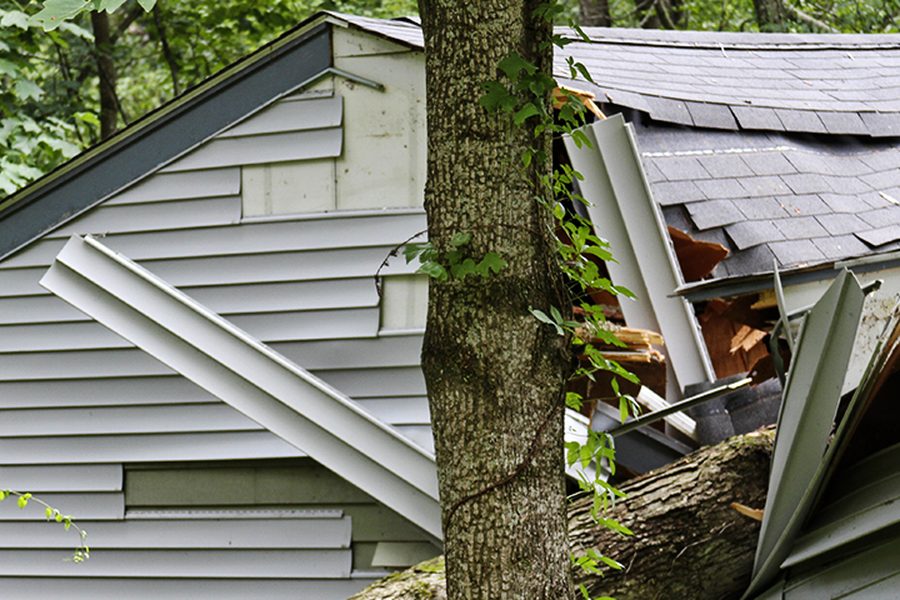
It is an emergency if water is actively entering the living space, if a tree or large limb has struck the roof, if a section of roof is open to the sky, or if wind has removed a substantial area of shingles with more weather coming. Those situations get worse by the hour and the interior damage — drywall, insulation, flooring, and eventually mold — frequently costs more than the roof work.
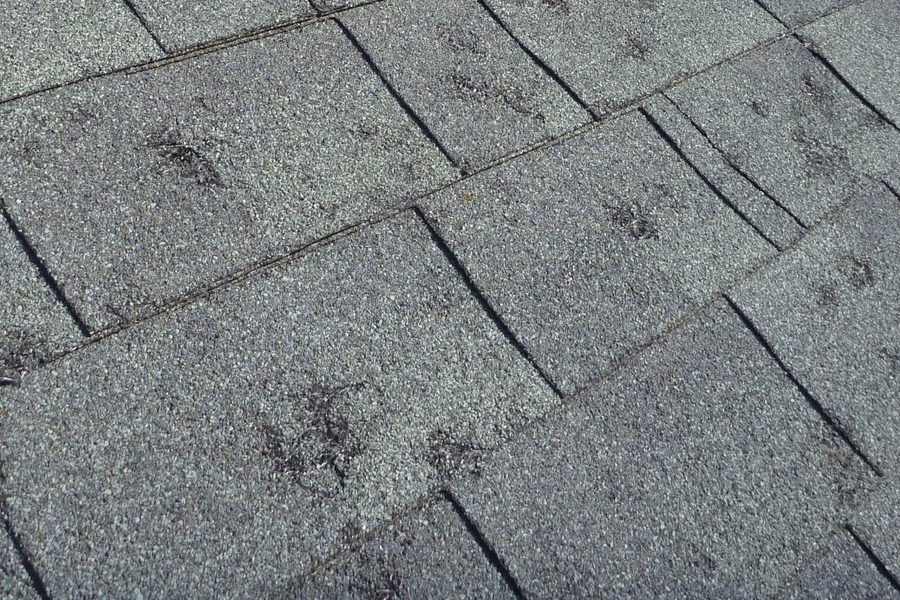
It can usually wait if you have found a small stain on a ceiling with no active dripping, if a few shingles are missing on a slope with no rain forecast, or if you noticed granules in the gutters. Those are real problems that need a prompt inspection, but they are not 2 a.m. problems, and calling them in during the day gets you a more thorough visit.
When you are not sure, call anyway. Describing what you are seeing to a dispatcher who has taken thousands of these calls costs nothing and takes two minutes.
After the Storm: Documentation and the Claim
We photograph the damage thoroughly during emergency response and give you those photos. If you file a claim, contemporaneous documentation of the damage and the mitigation is the strongest material you can have.
We do not negotiate insurance claims on your behalf, and we never offer to absorb or waive a deductible. Both are things we do not do, and any contractor offering the second one is proposing something you do not want to be part of. What we provide is a thorough documented inspection and an honest written scope of the work required.
Once the water is stopped and daylight is back, the next step is finding exactly where it got in. Our guide to roof leak repair in Indianapolis walks through how we trace a leak from the stain inside back to the entry point on the roof.
Active water coming through a flat or low-slope roof is stopped the same night, then made permanent in daylight once we can trace it back upslope to the seam or flashing that let it in — see flat roof repair in Indianapolis for how that second visit works.
Frequently Asked Questions
Do you really answer the phone at 3 a.m.?
Yes. A live dispatcher answers (317) 726-6000 24 hours a day, every day including holidays. You will not get a voicemail box during a storm.
How much does emergency tarping cost?
It depends on the size and accessibility of the damaged area. We will tell you the cost before we do the work. Given what interior water damage costs, tarping is almost always the cheaper decision.
Will you fix my roof the same night?
No, and neither should anyone else. Permanent shingle work requires dry decking and safe conditions. We tarp to stop the damage immediately, then perform the real repair as soon as conditions allow.
Is emergency tarping covered by insurance?
Emergency mitigation is commonly covered, and most policies actually require you to take reasonable steps to prevent further damage. Keep the documentation and the invoice.
A tree hit my roof. What is the first call?
If anyone is hurt or there is a gas or electrical hazard, call 911 first. Otherwise call (317) 726-6000. Do not go up to look — a limb strike frequently breaks decking, and the roof may not hold weight where it appears intact.
Do you serve the whole metro at night?
Yes, Marion County and the surrounding counties. Because we work this area continuously, we are not routing a crew in from out of state after a storm.
Roofing Across the Indianapolis Metro
We serve Marion County and every surrounding county — Hamilton, Boone, Hendricks, Johnson, Hancock, Morgan, Madison, Shelby and Putnam. See the full list of cities and towns we cover →
Get a free roof inspection
No charge, no obligation, and you keep the photographs. A live person answers 24 hours a day.