
The Short Answer
Wind damage to a roof usually starts small — shingles that were lifted and creased, tabs torn away, a loosened ridge cap or a strip of flashing pulled up — and any of those openings lets the next rain reach the decking below. Repairing it properly means finding every shingle whose seal was broken, not just the pieces lying in the yard, replacing or re-securing them with matching material, and tarping anything open until the permanent repair is done. John Beal Roofing has been owned and run by the same family since 1947; it holds Owens Corning Platinum Preferred status, is rated A+ by the Better Business Bureau, and puts its own employees on your roof rather than hired subcontractors. Call (317) 726-6000 day or night to reach a live member of our team, and the inspection costs you nothing.
What Wind Actually Does to a Shingle Roof
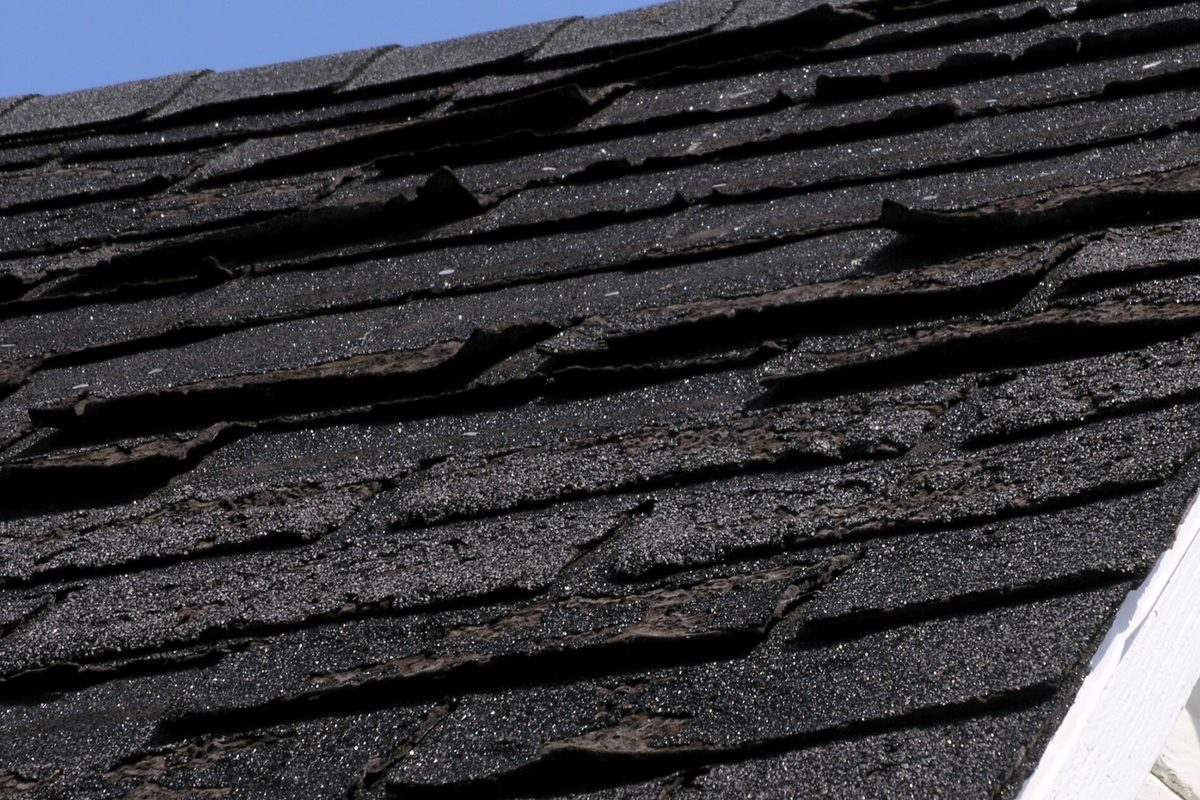
Asphalt shingles are held down two ways: nails driven through each course, and a factory strip of adhesive that bonds each shingle to the one below it after a few warm days in the sun. That bond is what keeps the lower edge from catching the air. When a gust gets under an edge anyway, the shingle bends upward like the page of a book, and the adhesive lets go.
A shingle that has been bent that far rarely lies flat again. It carries a horizontal crease across its face, and the broken seal means the next storm can lift it with less force than the first. Over a season or two the crease cracks through, the tab tears loose, and what started as an invisible problem becomes a gap you can see from the street.
Wind rarely hits a roof evenly. Edges, corners, rakes and the ridge take the strongest uplift, while the middle of a broad slope often comes through untouched. That pattern is why damage clusters along the perimeter of the house and on the side facing the storm, and why a quick look at one slope can miss most of what happened.
Signs of Wind Damage You Can Spot From the Ground
Start with the yard. Pieces of shingle, strips of ridge cap, bits of drip edge or a loose vent cap on the lawn after a storm tell you something came off, and the spot it came from is almost always larger than the piece you found.
Then look up at the roof in low-angle morning or evening light. Missing shingles show as darker patches where the underlayment or an older layer is exposed. Lifted shingles cast small shadows along their lower edges, and creased ones show a faint straight line across the tab. Ridge caps that sit crooked, flashing bent away from a wall or chimney, and gutters pulled loose at a corner all point to wind.
Inside, check the attic with a flashlight on the next rainy day. Daylight through the roof boards, damp spots on the decking near the eaves, or wet insulation under a valley are signs that an opening is already letting water in. A stain spreading across an upstairs ceiling means it has gone further; our roof leak repair page covers how we trace that kind of leak back to where it starts.
Why Lifted Shingles Matter Even When Nothing Is Missing
The most common thing we find after a central Indiana windstorm is a roof that looks fine from the driveway and is not. The shingles are all still there, but dozens of them have unsealed and creased. Homeowners understandably put the repair off because nothing is dripping yet.
An unsealed shingle is no longer doing its whole job. Rain driven sideways by the next storm can travel up under the loose edge toward the nail line, and a creased shingle sheds granules along the fold, so the asphalt underneath bakes in the summer sun and cracks sooner. Left alone, a scattering of lifted tabs often turns into a bare section of roof the next time a strong front moves through.
That is also why the timing of an inspection matters. Damage is easiest to document while it is fresh and clearly tied to a specific storm, before months of ordinary weather blur the picture. If the same storm also dropped hail, our storm and hail damage repair page explains how we sort out what each one did.
How We Inspect and Repair Wind Damage
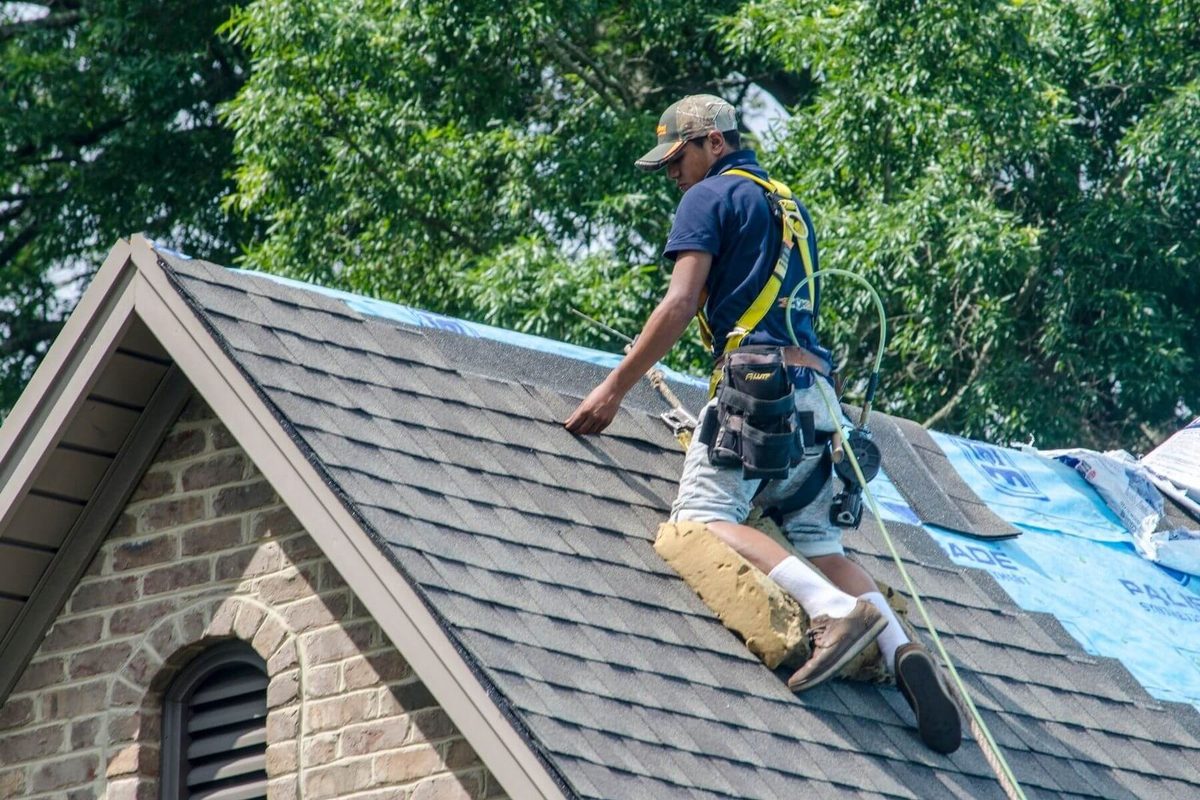
An inspection starts on the roof, not from a ladder propped at the eave. The crew walks each slope and checks shingles by hand along the edges, corners and ridge, where uplift is strongest, gently testing tabs to find the ones whose seal has let go. Creases, torn tabs, popped nails, displaced ridge caps and loose flashing are marked and photographed so you can see exactly what we saw.
Repairs follow what the inspection finds. Shingles that are creased or torn are removed and replaced, with the courses above lifted carefully so their nails can be pulled and reset without breaking more sealant. Shingles that unsealed but are otherwise sound can sometimes be hand-sealed back down with roofing cement. Ridge caps are reset, flashing is refastened and resealed, and any exposed decking is checked for water damage before new material goes over it.
Matching matters on a visible slope. We try to source shingles that match the existing color and style, and we will tell you plainly when a discontinued product means a patch will show. When damage is spread across several slopes, or the roof is old enough that its shingles crack as they are lifted, repair stops making sense, and our roof replacement page describes what the next step looks like.
When Wind Opens the Roof: Emergency Tarping
Sometimes a storm does more than lift a few tabs. A large section of shingles torn away, a vent or skylight cover ripped off, or a limb punched through the decking leaves the inside of the house exposed to whatever rain comes next. In those cases the priority is getting the opening covered, the same night if possible.
Our crews cover openings with heavy tarps fastened and weighted so the wind cannot get under them, extended past the damaged area and up over the ridge where possible so water sheds across the top rather than running beneath. That temporary cover buys time to order matching material and schedule the permanent repair without the house taking on more water.
Please stay off the roof yourself after a windstorm, especially while it is wet or still gusting, and keep well away from any downed power line. If water is coming in, protect what you can inside and pick up the phone. Our 24/7 emergency roof repair team answers through the night.
Insurance, Documentation and What Comes Next
Many homeowners policies cover sudden wind damage, though what gets paid depends on your policy, your deductible and the adjuster's findings. Wear from age and neglect is treated differently from damage caused by a specific storm, which is why clear, dated evidence is so useful.
We give you the photographs from the inspection along with a written description of what we found and what we recommend. If you decide to file a claim, those records help show the adjuster where the damage is and how widespread it is, and we can be on site when the adjuster comes out. The claim process itself is laid out in our Indiana roof insurance claim guide; most of its steps apply to wind claims as well as hail.
Not every windstorm calls for a claim. When the damage amounts to a handful of shingles, the repair may cost less than your deductible, and we will say so. Our roof repair cost guide explains what drives the price of a small repair, and a free roof inspection is the simplest way to find out where you stand.
Frequently Asked Questions
How strong does wind have to be to damage a roof?
There is no single number. A roof in good shape with well-sealed shingles can come through a strong storm untouched, while an older roof, one whose shingles never sealed properly, or one with weak spots at the edges can lose shingles in gusts that seem ordinary. Age, installation and exposure matter as much as the wind itself.
Can I just glue lifted shingles back down myself?
We advise against it. Climbing a roof is risky, and a shingle that has creased usually needs replacing rather than gluing; cement smeared over a cracked shingle hides the problem without fixing it. A crew can tell you which shingles can be resealed and which have to come off.
Will replaced shingles match the rest of my roof?
We work to find the closest match in color and style. Even an exact product match can look slightly different at first because the existing shingles have weathered, and some older lines are no longer made. If we expect a visible difference, you will hear about it before the work starts.
How soon after a windstorm should I have my roof inspected?
As soon as you reasonably can, ideally within days. Fresh damage is easier to spot and to connect to a specific storm, and getting loose shingles fixed before the next round of weather keeps a small repair from growing.
Does homeowners insurance cover wind damage to a roof?
Many policies do cover sudden wind damage, but coverage, deductibles and exclusions vary, and the adjuster decides what is paid. We document the damage with photos and a written report so you have a clear record to work from.
What should I do if wind tore part of my roof off tonight?
Stay off the roof and away from any downed lines. Shift valuables out from under the drip, set out buckets, and cut power to any fixture the water has reached. Our line, (317) 726-6000, is staffed around the clock, and we can send a crew out to tarp the opening.
Wind Damage Repair Around Indianapolis
Strong fronts tend to sweep across the whole region at once, so after a windstorm we hear from homeowners in Carmel, Noblesville and Fishers on the north side, Plainfield and Avon to the west, and Greenwood and Franklin to the south. For general fixes see roof repair or our shingle roof installation page; if the storm broke the roof deck itself, roof decking replacement explains what happens next. View all the communities on our coverage map →
Get a free roof inspection
No charge, no obligation, and you keep the photographs. A live person answers 24 hours a day.