
The Short Answer
Roof decking is the layer of plywood, OSB or old plank boards that every shingle, nail and strip of underlayment on an Indianapolis home is fastened to, and once it softens, delaminates or rots, no new shingle laid over it will stay flat or stay watertight. Most decking problems are found during a tear-off, some are felt underfoot on an inspection, and a few announce themselves as a sagging roof plane you can see from the street. John Beal Roofing has been a family-run company since 1947, holds Owens Corning Platinum Preferred status and a BBB A+ rating, and keeps every job on its own in-house crews instead of handing it to subcontractors. The phone at (317) 726-6000 is staffed by real people day and night, and neither the inspection nor the written estimate costs anything.
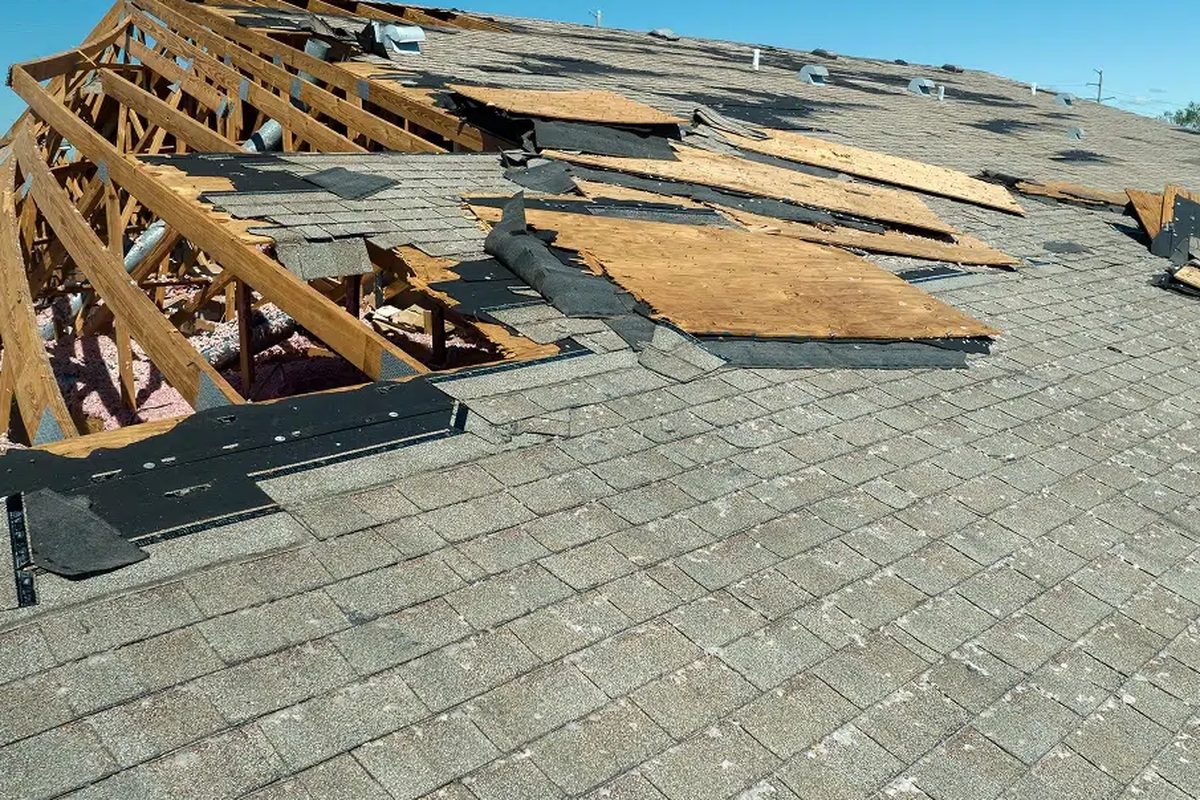
What the Deck Actually Does on Your Roof
The deck is the structural skin of the roof. It ties the rafters or trusses together into one stiff plane, gives the roofing nails something solid to bite into, and spreads the weight of snow, foot traffic and wind across the framing instead of letting it concentrate between supports. Shingles are a weather surface. The deck is what turns them into a roof.
That relationship only runs one direction. A shingle can only be as flat, as tightly fastened and as wind-resistant as the board under it. Nails driven into soft or crumbling wood lose their grip, and a shingle with a weak fastener is the one that lifts first in a strong gust. When a few tabs go missing in an odd pattern after a moderate wind, the explanation is sometimes underneath rather than on the surface.
Because the deck is buried, it is the one part of the roof most homeowners never think about until a contractor mentions it on an estimate. We would rather explain it up front, so a line for replacement sheets reads as something you already understand instead of a surprise on tear-off day.
Signs the Problem Is Under the Shingles
From the ground, look along the ridge and the eaves in low, raking light early in the morning or late in the afternoon. A roof plane should read as a flat surface. A dip between rafters, a wavy line running across the field, or a ridge that sags in the middle points to deck boards or framing that have lost their stiffness.
In the attic, take a flashlight and study the underside of the roof boards rather than the insulation. Dark staining, a white or gray fuzz, boards that have separated into layers, and nail tips that are rusted or ringed with moisture all mean the wood has been wet more than once. Daylight showing around a vent pipe or along the edge of a sheet is worth noting too.
On the roof itself, the giveaway is how it feels. A roofer walking a slope notices right away when a section gives slightly underfoot, the way a floor does over a weak joist. We never ask homeowners to climb up and test that themselves; it is precisely the kind of spot where a foot can go through. If you have noticed any of the outside or attic signs, our guide to the signs you need a new roof walks through what usually comes with them.
Why Roof Decks Rot in Central Indiana
Leaks are the obvious cause, and the slow ones do the most harm. A drip that never reaches the ceiling can soak the same few square feet of plywood every rain for years, because the insulation below absorbs it and nobody inside ever sees a stain. By the time it does show, the wood around the entry point is often soft well beyond the original hole.
The less obvious cause starts inside the house. Warm, humid air from showers, cooking and laundry rises into the attic, and in an Indiana winter it meets the cold underside of the deck and condenses there. An attic without enough intake at the soffits and exhaust near the ridge holds that moisture against the wood all season. Proper attic ventilation is what prevents it, and it is why we look at airflow every time we find a deck that rotted from below instead of from above.
The eaves take their own beating. Snow melting higher on the roof refreezes over the cold overhang, backs water up under the bottom courses, and the first few feet of decking above the gutter line see more moisture than anywhere else on the roof. Clogged gutters spilling behind the fascia add to it. That is why the bottom row of sheets is so often the first section we end up replacing.
Plank, Plywood and OSB: What We Find and What Goes Back
Older Indianapolis neighborhoods still have houses roofed over solid wood planks, usually one-by boards laid side by side across the rafters, sometimes with gaps between them left over from the days of wood shingles. Plank decking can be perfectly serviceable while it stays dry and tight. When boards are cracked, gapped too widely, or too uneven for a modern shingle to lie flat on, the usual correction is to sheath over them or replace the affected boards, and we explain which one applies before anything is ordered.
Newer homes are decked with plywood or oriented strand board, the panel made from compressed wood strands and resin. Both are standard and both perform well when dry. They fail differently when wet: plywood tends to delaminate, its veneers peeling apart into layers, while OSB is more prone to swelling at the edges and softening through the panel. Either way, a sheet that has lost its strength gets cut out back to sound framing, never patched with a smaller scrap floating between rafters.
Replacement sheets are matched to the thickness of the surrounding deck so the new roof lies on one continuous plane, with the edges landing on framing and nailed off to the rafters or trusses at proper spacing. If neighboring sheets were poorly fastened or have worked loose, they get refastened while the roof is open. Details like that are invisible once the job is finished and are exactly what keep shingles flat for the life of the roof.
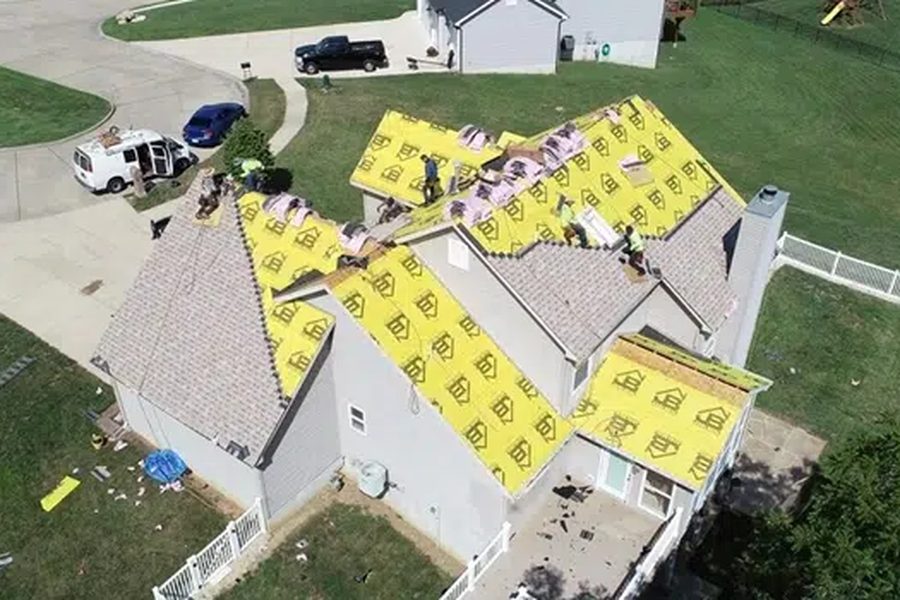
How Decking Is Handled During a Tear-Off
Nobody can say precisely how much decking a roof needs until the old shingles are off. An inspection identifies soft areas and staining, but boards that look fine from the attic can turn out to be compromised on top, and sections that felt questionable underfoot are sometimes sound once exposed. Tear-off is the one moment when every board on the roof is visible at once.
Our crews walk the bare deck after the old roofing and underlayment come off, mark every sheet that is soft, delaminated, cracked or rotted, and replace those sections before any new underlayment goes down. We photograph what we pull, so you see the condition of the wood that came out of your roof instead of taking our word for it.
How replacement decking will be counted and billed is explained before work begins, so that conversation happens at the kitchen table and not in the driveway halfway through the job. Then the new system goes on over a solid base — underlayment, flashing, ventilation and shingles, as covered on our roof replacement and shingle roof installation pages. For a sense of budget first, our roof repair cost guide covers what moves the numbers.
Storm Damage, Insurance and a Deck That Was Already Tired
A severe storm can damage decking directly. A falling limb can crack sheets or punch straight through them, and winds that peel away shingles and underlayment leave bare wood open to rain until the roof is dried in. When that happens, our 24/7 emergency roof repair crews tarp the opening so the deck and the rooms below stop taking on water, and our storm and hail damage repair team handles the permanent work.
Insurance is where the line between sudden damage and gradual deterioration matters. Policies are generally written to cover the first and exclude the second, so decking broken in a storm and decking that rotted over years of attic condensation can land on opposite sides of a claim, even on the same roof. Photographs of the deck taken at tear-off help document which is which. How a claim moves from start to finish is laid out in our guide to a hail damage roof insurance claim in Indiana.
We are plain about it either way. If the wood was failing before the storm, we will say so, and if a section was broken by the storm, we will document it. Your adjuster and your policy decide coverage; our job is to show accurately what is on the roof.
Frequently Asked Questions
What are the signs that roof decking needs replacing?
Sagging between rafters, a spongy feel underfoot, dark stains or layering on the underside of the boards in the attic, and rusted nail tips are the usual indicators. A free inspection narrows it down, and tear-off shows the full picture.
Can new shingles go over damaged decking?
They can be nailed over it, but they should not be. Fasteners do not hold in soft wood, shingles will not lie flat over swollen or uneven sheets, and the rot keeps spreading once it is covered up. Damaged sections are replaced before the new roof goes on.
Is plywood or OSB better for a roof deck?
Both are accepted sheathing materials and both hold up well when the attic is properly ventilated and the roof stays dry. What matters more is that replacement sheets match the thickness of the existing deck and are fastened correctly to the framing.
Why can't you tell me exactly how much decking I need before tear-off?
The top surface of every board is hidden under shingles and underlayment until they come off. We can flag suspect areas from the attic and the roof, but the final count is made with the deck exposed, and we photograph every section we replace.
Does homeowners insurance pay for rotted roof decking?
Decking damaged suddenly by a storm or a falling tree is commonly part of a covered claim. Rot from long-term leaks or attic moisture is generally treated as wear and excluded. Your policy and your adjuster make that call; we document what we find.
Do you only replace decking during a full roof replacement?
No. A localized soft spot around a leak, a vent or a chimney can often be cut out and replaced as part of a repair, with the shingles around it rebuilt. When the damage is widespread or the shingles have only a few seasons left anyway, we will tell you a replacement makes more sense.
Roof Decking Replacement Across the Indianapolis Metro
Our crews replace decking on homes throughout the ten counties we serve, from Carmel, Westfield and Zionsville on the north side to Greenwood and Franklin in Johnson County, Avon to the west and Greenfield to the east. Not sure whether your roof needs more than a repair? Start with a free roof inspection, or if water is coming in right now, see roof leak repair. Browse the full list of towns we serve →
Get a free roof inspection
No charge, no obligation, and you keep the photographs. A live person answers 24 hours a day.