
The Short Answer
The clearest signs an Indianapolis roof needs replacing are: curling or cupping shingle edges, heavy granule loss in the gutters, bald or cracked shingles, sagging in the roof plane, daylight visible through the attic decking, repeat leaks in different locations, and an age past 20 to 25 years. Any one of these warrants an inspection; several together generally mean replacement rather than repair. John Beal Roofing offers free inspections with photographs you keep. Call (317) 726-6000.
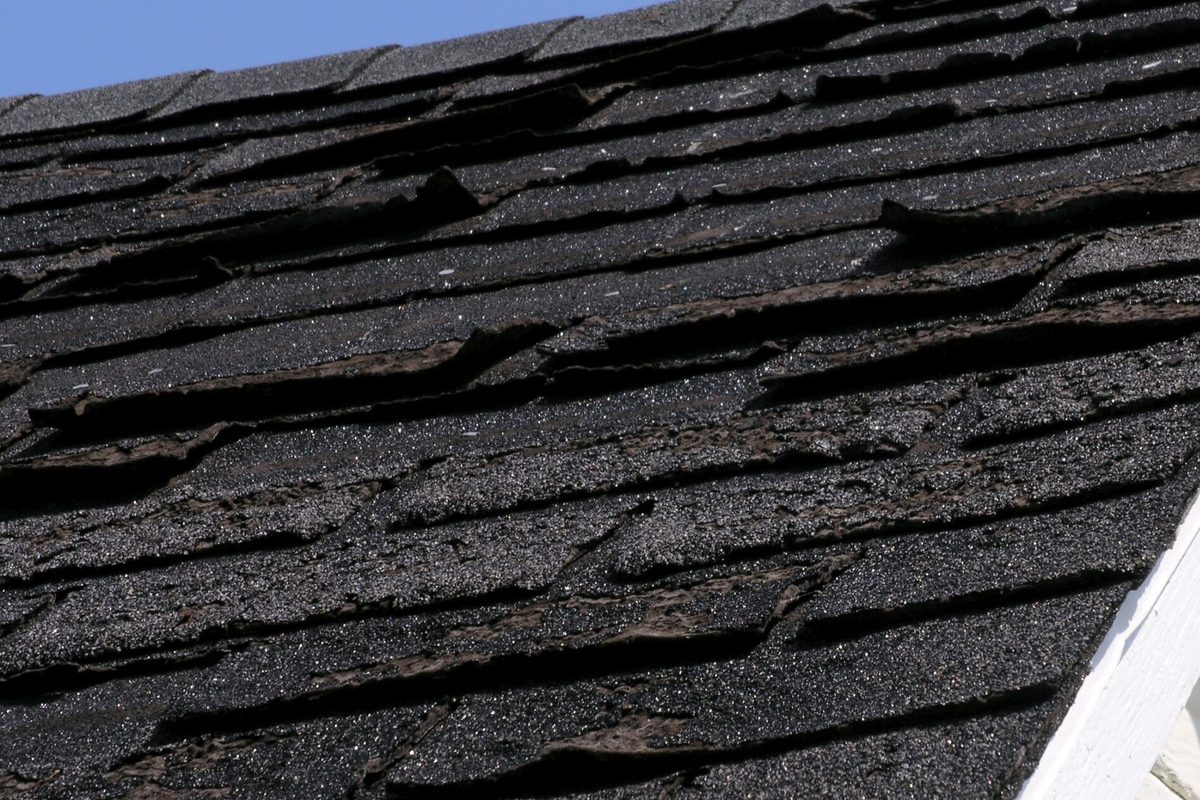
1. Curling, Cupping or Clawing Shingles
Look at your roof from across the street in flat morning light. If the shingle edges lift away from the roof at the corners — curling — or the middles rise while the edges stay down — cupping — the shingle has lost its flexibility and dried out. This is age and heat, and it is usually accelerated by a poorly ventilated attic cooking the shingles from below.
Curled shingles are also mechanically compromised. They no longer seal to the course beneath, which means the next windstorm has an edge to grab. Widespread curling is a replacement conversation, not a repair one.
2. Granules in the Gutters
Some granule loss is normal, particularly in the first months after installation. What is not normal is a steady accumulation of coarse black grit in your gutters and at the downspout discharge on a roof several years old.
Granules are the shingle's UV shield. Once they are gone the asphalt is directly exposed and degrades quickly, which is why you will often see shiny black patches on a roof shedding granules heavily. Those bald spots are the shingle in its final stage.
3. Bald Patches and Cracked Shingles
Cracking across the face of shingles — not a single broken tab from impact, but a pattern across a slope — means the mat has become brittle. Combined with bald patches, it means the roof is at the end of its service life regardless of what the calendar says.
This shows up first on the south and west slopes in Indianapolis, because they take the most sun exposure. If the south slope looks a decade older than the north slope, that is normal and it is telling you where the roof will fail first.
4. Sagging or an Uneven Roof Plane
Sight along the ridge line and along the roof planes. They should be straight. Any dip, wave or sag indicates a structural problem — saturated decking, a compromised rafter, or accumulated weight from multiple shingle layers.
This one is not a wait-and-see item. Sagging means water has already been getting in long enough to weaken structure. Call for an inspection promptly.
5. Daylight or Stains in the Attic
Go into the attic on a bright day with the lights off. Pinpoints of daylight through the decking mean holes. Then look at the underside of the decking and the rafters for dark staining or streaking, which is the record of water that has been getting in — sometimes for years before any ceiling stain appeared downstairs.
While you are up there, check whether insulation has been pushed into the soffit area and blocked your intake ventilation. That is one of the most common and most correctable causes of premature roof failure in Indianapolis homes.
6. Repeat Leaks in Different Places
One leak is a repair. A second leak in a different location a season later, then a third, means the system has reached the end. Individual repairs on a failing roof are just installments on a replacement, and every leak between them damages drywall, insulation and possessions.
When a homeowner tells us they have had three roofers out for three different leaks in two years, we already know roughly what we are going to find.
7. Age Past 20 to 25 Years
A quality architectural shingle installed correctly on a well-ventilated attic should give 25 to 30 years in central Indiana. Three-tab shingles and poorly ventilated installations run shorter, often 15 to 20.
Age alone is not a reason to replace a roof that is performing. But past twenty years it is a reason to have it looked at annually rather than waiting for a leak, because the failure mode at that age tends to be sudden rather than gradual — one storm, and a large area goes.
Frequently Asked Questions
How long does a roof last in Indianapolis?
A quality architectural shingle installed correctly on a properly ventilated attic should give 25 to 30 years. Three-tab or poorly ventilated roofs commonly run 15 to 20.
Is granule loss always bad?
Not always — some shedding is normal early on. Steady accumulation in the gutters on an older roof, especially with visible bald patches, is a real end-of-life signal.
Can I tell from the ground?
You can catch several of these from the ground in flat morning light: curling, missing shingles, sagging, and visible bald patches. Bruising and broken sealant bond require someone on the roof.
My roof is 22 years old but not leaking. Should I replace it?
Not automatically. Get it inspected annually at that age. What changes past twenty years is that failure tends to arrive suddenly rather than gradually.
Does one leak mean I need a new roof?
No. A single leak from a failed boot or flashing is a straightforward repair. It is the pattern of repeat leaks in different places that signals a system at its end.
How do I get an honest assessment?
A free inspection from a contractor with a long local history, with photographs you keep. If the roof does not need replacing, our written finding says so.
Roofing Across the Indianapolis Metro
We serve Marion County and every surrounding county — Hamilton, Boone, Hendricks, Johnson, Hancock, Morgan, Madison, Shelby and Putnam. See the full list of cities and towns we cover →
Get a free roof inspection
No charge, no obligation, and you keep the photographs. A live person answers 24 hours a day.