
The Short Answer
Almost every flat roof leak in Indianapolis starts at a seam, a flashing or a drain — not in the open field of the membrane — which is why the repair depends entirely on finding the right one. Low-slope assemblies fail at their edges and interruptions, and water entering there can travel a long way across the deck before it shows up on a ceiling. John Beal Roofing has been family-run since 1947, is Owens Corning Platinum Preferred and BBB A+ rated, and works flat roofs with in-house crews. A live person answers (317) 726-6000 at any hour, and the inspection behind your written estimate is free.
What Makes a Low-Slope Roof Different
Flat is a figure of speech. A properly built low-slope roof carries a shallow pitch — often a quarter inch of fall per foot — designed to walk water toward drains, scuppers or a gutter line rather than off an edge. That small slope is the entire drainage strategy, and anything that interrupts it, from a settled deck to a new rooftop unit set on sleepers, changes how the roof behaves in a rainstorm.
A pitched shingle roof survives small mistakes because gravity keeps water moving. A low-slope roof does not have that margin. Water sits on it for hours after a storm, it works into any lap that was not fully bonded, and it finds the one fastener head or lap seam that was rushed on installation day. The membrane itself is usually in better condition than the details around it.
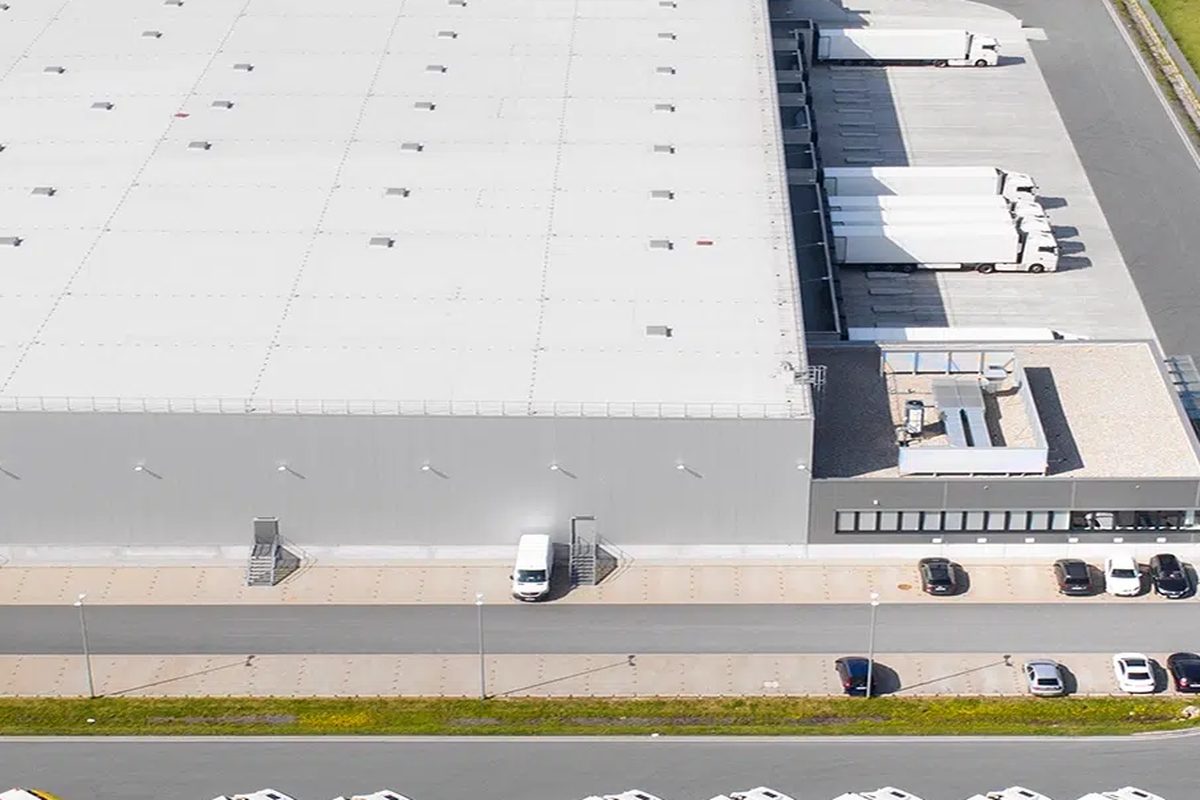
This is also why flat roofs are so common on the buildings they cover in this market — strip retail along Pendleton Pike, warehouse and light industrial space on the west side, apartment buildings, schools, churches and the flat-roofed additions and porch roofs on a great many older Indianapolis houses. The building type varies; the failure pattern does not.
Where Indianapolis Flat Roofs Actually Leak
Seams come first. Every roll of membrane has to be joined to the next one, and that joint is either heat-welded, chemically bonded or torched depending on the system. Any of those can be sound for years and then open at a corner where three plies overlap, where a lap ran across a low spot, or where the original weld was made on a cold, damp morning and never fully took.
Penetrations come second, and there are more of them on a flat roof than people expect: plumbing stacks, exhaust fans, condensate lines, gas piping, conduit, antenna feet, and on commercial buildings the curbs under rooftop HVAC. Every one is a hole through the membrane, sealed by a boot, a pitch pocket or a welded flashing that has a shorter service life than the field of the roof around it.
Third is the perimeter — parapet walls, coping caps, edge metal and scuppers. Wind-driven rain does not respect a wall junction, and a coping joint that has opened a sixteenth of an inch will feed water behind the membrane and down inside the wall where no amount of surface patching will reach it. When we cannot find a leak in the field, the perimeter is where we go next.
Ponding Water Is a Symptom, Not the Disease
Standing water on a flat roof more than a couple of days after rain tells you the drainage plan has stopped working somewhere. Sometimes the cause is trivial — a clogged drain strainer, a scupper packed with leaves and shingle grit off an adjoining higher roof. Often it is structural: a deck that has deflected between joists, tapered insulation that was cut short, or a unit installed after the fact that dams the flow.
Ponding does real damage on its own. It magnifies ultraviolet exposure, it holds dirt and organic debris that hold moisture longer, it accelerates the aging of an exposed membrane, and in an Indiana winter it freezes and expands directly on top of the laps you least want stressed. A roof that ponds is not necessarily leaking today, and that is exactly why it gets ignored until it is.
We photograph ponding areas during the inspection and measure where the water sits relative to the drains, because the fix is different for each cause. A blocked drain is housekeeping. A dead-flat bay caused by deflection needs tapered insulation or a cricket built in, and patching the membrane there without correcting the slope only resets the clock on the same leak.
EPDM, TPO, Modified Bitumen and Built-Up
EPDM is the black rubber membrane on a great many central Indiana buildings put up from the 1980s onward. It ages well against sunlight but its seams are its weakness, particularly on older jobs where the laps were made with tape or adhesive rather than the current formulations. Repairs are made with cleaned and primed cover strips, and a properly detailed EPDM patch is a permanent repair rather than a stopgap.
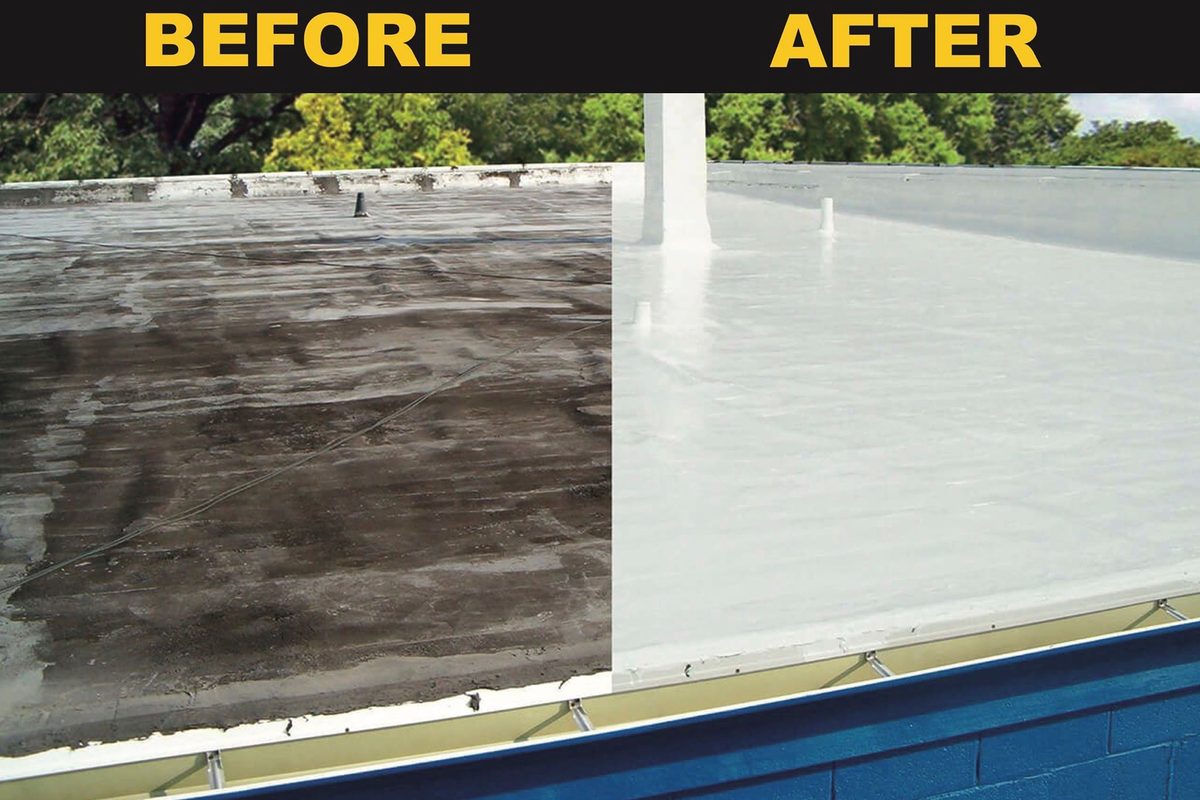
TPO is the white single-ply now used on most new commercial low-slope work. Its seams are hot-air welded, which makes a sound weld genuinely strong, and makes a bad weld a straight line of failure you can sometimes peel apart by hand. TPO repairs are welded rather than glued, and welding is a skill and an equipment question — the wrong temperature either fails to fuse or scorches the sheet.
Modified bitumen and older built-up roofs — the layered felt-and-asphalt assemblies with gravel on top — are still very much in service around Indianapolis, and they are repaired hot or with self-adhering plies depending on the roof. Whatever the system, we repair in kind. Smearing an incompatible sealant across a membrane it was never made to bond to is the most common thing we get called out to undo.
Repair, Restore or Replace
Not every flat roof needs replacing, and we will say so. If the field of the membrane is sound and the failures are concentrated at identifiable seams, flashings and drains, a targeted repair is honest work that buys real years. That is the outcome we look for first, and it is the recommendation we make most often on roofs still in the middle of their life.
A restoration or coating makes sense in a narrower band of cases: a membrane that is weathered and chalky but continuous, with sound insulation underneath and no trapped moisture. Coating over a wet roof assembly does not dry it out; it seals the water in and hides the deterioration until the deck itself is compromised. We core-check or probe suspect areas before recommending a coating for exactly that reason.
Replacement is the right call when the insulation is saturated over a meaningful area, when the deck has been compromised, or when a roof has been patched so many times by so many hands that there is no continuous system left to repair. For a full low-slope project, see our commercial roofing page; if the building also has pitched sections, roof replacement covers how those are handled.
What a Flat Roof Service Call Looks Like
We start inside where we can. The stain on the ceiling tile is the end of the water's journey, not the beginning, but the framing direction, the location of interior walls and the path of any deck flutes tell us which way it traveled. Then we get on the roof and work back upslope from directly above the interior evidence, checking every seam, penetration and flashing along the way.
When the source is not obvious we flood-test in sections, isolating one area of the roof at a time rather than soaking the whole surface and guessing. It is slower and it is the difference between fixing the leak and fixing something near the leak. You get photographs of what we found, what the repair involved, and the condition of the areas we passed over on the way there.
Active water coming into an occupied building does not wait for a scheduled appointment. Our 24/7 emergency roof repair crews will stop the intrusion first and come back to make the permanent repair in daylight. If nothing is leaking yet and you simply want the roof assessed before winter, a free roof inspection is the place to start.
Frequently Asked Questions
Can a flat roof be repaired, or does it have to be replaced?
Most can be repaired. If the field of the membrane is intact and the failures are at seams, flashings or drains, a targeted repair is the right answer and it buys real years. Replacement becomes the honest recommendation when the insulation is saturated over a large area or the deck itself is compromised.
Why does water sit on my flat roof after it rains?
A low-slope roof relies on a shallow built-in pitch to move water to drains or scuppers. Standing water days later means something has interrupted that path — commonly a blocked drain, but also deck deflection, insulation cut short, or equipment set in the drainage line. We photograph and measure the ponding to tell which it is.
How do you find a leak when the ceiling stain is nowhere near it?
Water travels across a flat deck before it drops through. We read the framing and deck direction inside, then work back upslope from that point on the roof, checking each seam and penetration. Where the source stays hidden we flood-test one isolated section at a time rather than soaking the whole roof.
Do you work on EPDM and TPO, or only asphalt roofs?
Both, and modified bitumen and older built-up roofs as well. We repair in kind — welded patches on TPO, cleaned and primed cover strips on EPDM — because sealant applied to a membrane it was never formulated to bond with fails again and makes the eventual proper repair harder.
Is a coating a good idea for my flat roof?
Only on a continuous, weathered membrane with dry insulation beneath it. A coating applied over a wet assembly traps the moisture and conceals the damage rather than stopping it, so we probe or check suspect areas before we will recommend one.
Can you come out if my building is leaking right now?
Yes. A live person answers (317) 726-6000 at any hour, including nights and weekends, and our emergency crews stop active water intrusion first, then return in daylight to make the permanent repair. The inspection and written estimate cost nothing.
Flat and Low-Slope Roof Repair Across the Indianapolis Metro
We service flat and low-slope roofs across the ten counties we cover — including Speedway, Beech Grove, Lawrence, Greenwood, Carmel, Fishers and Plainfield. For whole-building low-slope work see commercial roofing, for pitched-roof problems see roof repair and roof leak repair, or check what a repair costs before you call. See every city and town we cover →
Get a free roof inspection
No charge, no obligation, and you keep the photographs. A live person answers 24 hours a day.